“Holistic healing” gets used so often in wellness marketing that it’s started to feel like a decoration rather than a description. Everyone says it. Fewer places explain what it actually means in practice — what changes about how you’re treated when a centre genuinely works this way, versus one that just uses the word.
So rather than repeat the phrase, we’d rather explain what it means at Shankus, specifically.
What “Holistic” Actually Means Here
At its simplest, holistic healing means treating the whole person rather than isolating one symptom and targeting it alone. If someone comes in with joint pain, a purely symptom-focused approach stops at the joint. A holistic approach asks what else is going on — sleep, stress, diet, posture, past injuries, daily habits — because these things are rarely unconnected in the body.
This isn’t just a philosophical stance. It shapes how a treatment plan actually gets built. Instead of a single therapy handed out for a single complaint, most plans at Shankus combine a few different elements working on the same problem from different angles.
The Core Principles Behind Every Plan
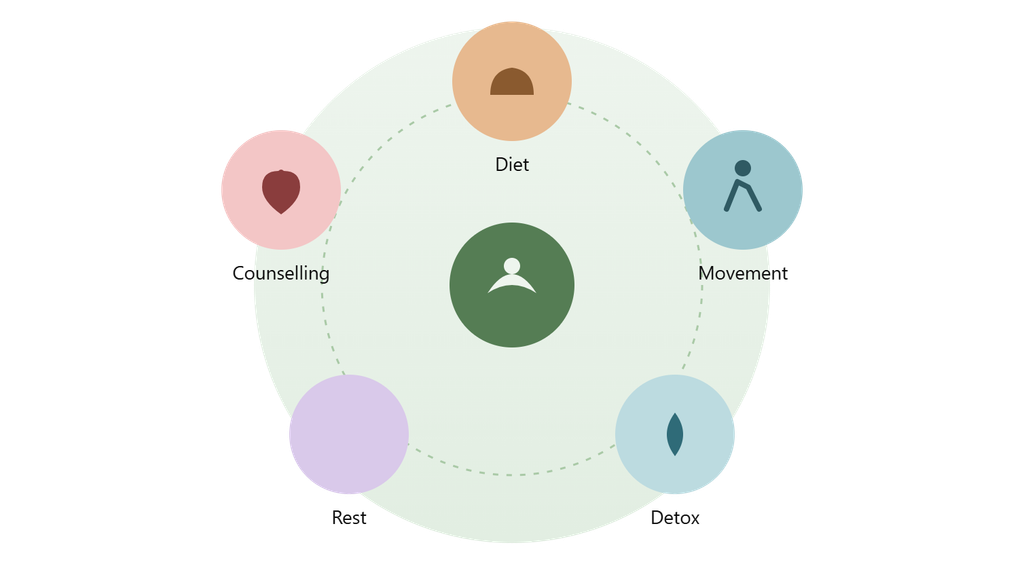
Every approach at Shankus is built around five recurring elements: diet, movement, detox, rest, and counselling. These aren’t separate add-ons — they’re treated as interconnected parts of the same system.
Diet is treated as genuinely therapeutic, not just a background health tip. What you eat directly affects digestion, energy, and how your body responds to any therapy layered on top of it. Movement and detox work together to support circulation and the body’s natural elimination processes. Rest is taken seriously as an active part of recovery, not a passive gap between treatments. And counselling exists because physical complaints and mental strain are rarely fully separate — a body under constant stress simply doesn’t recover the same way.
The Therapies That Bring This Together
A few specific therapies are used to put these principles into practice, each addressing a slightly different part of the picture.
Pre-medicated oil massage uses warm herbal oils to calm muscles, ease joint pain, and improve circulation — a gentler, more nourishing approach than a standard massage, since the oils themselves are chosen to support the treatment.
Stone therapy works on tight, stubborn muscle tension, aiming to improve joint flexibility and general ease of movement, often for people who’ve been dealing with the same stiff spot for a long time.
Electro-puncture builds on the same principles behind acupuncture, targeting key points on the body — it’s commonly used for arthritis-related pain, general acute pain, and even nausea related to chemotherapy.
Shirodhara involves a steady stream of medicated oil, primarily used for stress reduction — it’s one of the more calming, meditative therapies offered, aimed at settling the mind as much as the body.
Herbal packs are used both for muscular relief and for skin — plant-based blends chosen to suit different skin types, aimed at genuine skin health rather than a one-size-fits-all treatment.
None of these therapies are positioned as a single fix. They’re building blocks, used in combination based on what an individual actually needs.
Supporting Recovery After Serious Illness
One area where the holistic approach matters most is recovery after a serious illness — something like cancer treatment or TB, where the body is often left with low metabolism, weaker immunity, and general daily struggle even once the primary treatment is complete.
It’s important to be precise about what naturopathy does and doesn’t do here. This isn’t a replacement for oncology or infectious disease treatment, and it isn’t positioned as one. What it focuses on is supporting the body through recovery — rebuilding strength, supporting digestion and sleep, and helping energy and confidence return gradually — always as a complement to medical care, not instead of it. Since every person’s recovery looks different, plans here are built individually rather than following a fixed template.
Rejuvenation for Everyday Life
Not everyone comes in recovering from something serious. A lot of guests are simply worn down by ordinary daily life — work stress, poor sleep, low energy that’s become normal rather than noticed. Rejuvenation-focused programs are built around the same core principles, just aimed at restoring balance and energy rather than addressing an acute health concern. It’s less about fixing something broken and more about stepping back from a pace that’s been quietly running you down.
Why This Approach Needs Real Expertise Behind It
Holistic healing sounds simple in theory — treat the whole person, not just the symptom — but doing it responsibly requires real clinical judgment about which therapies to combine, in what sequence, and for how long. This is where having experienced practitioners actually matters, rather than being a nice-to-have detail.
Shankus is led by Dr. Chirag Jaykishan Andhariya, Chief Medical Officer, who brings over 25 years of clinical and academic experience in naturopathy and integrative health, and has personally guided more than 28,000 patients through their recovery and wellness journeys. That kind of depth of experience is part of what makes it possible to build individualised plans rather than applying the same combination of therapies to everyone who walks through the door. You can read more about the team’s background on our About Us page.
Getting Started
If you’ve been dealing with something that feels bigger than a single symptom — ongoing fatigue, a health concern with no clear single cause, or simply the sense that you need a genuine reset — a holistic approach is built for exactly that kind of situation. Want to understand what a personalised plan would look like for you? Book a consultation at Shankus and our team will walk you through it.
Quick FAQs
What’s the difference between holistic healing and just combining a few therapies? Combining therapies randomly isn’t the same as a holistic approach — the therapies need to be chosen based on an individual assessment of what’s actually driving a person’s condition, not applied as a fixed package.
Is holistic healing a replacement for conventional medical treatment? No. It’s generally used to support recovery and overall wellbeing alongside medical care, particularly for people recovering from serious illness — not as a substitute for it.
How long does a holistic naturopathy program usually take? This depends entirely on the individual and what they’re addressing — an initial assessment is what determines this, rather than a fixed timeline for everyone.
Who decides which therapies are combined for me? A qualified practitioner determines this based on your health history, current condition, and goals during an initial consultation.
Reviewed by: Shankus Natural Health Centre (25+ years of clinical and academic experience in naturopathy and integrative health)